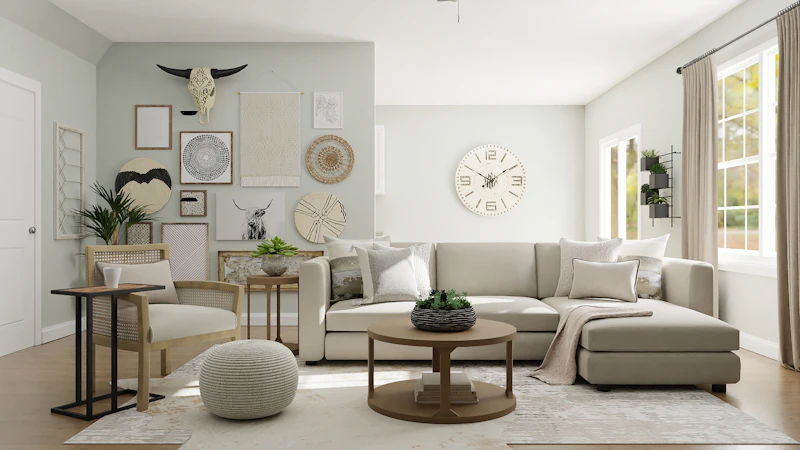
Trends are seductive precisely because they're temporary. A timeless palette does the opposite — it recedes, supports the life happening in the room, and still feels right a decade later. Here's how we approach it.
Start with the light, not the swatch
Before we choose a single colour we spend time in the room at different hours. North light is cool and steady; west light turns warm and golden by evening. A white that looks crisp at noon can read grey and clinical by dusk. The palette has to flatter the light the room actually has, not the light in a showroom.
Build on a quiet foundation
We anchor most homes with a base of warm neutrals — plaster, oat, mushroom, bone — drawn from natural materials rather than a fan deck. These tones have depth and movement because they reference stone, linen and wood, so they never feel flat.
A timeless room is mostly background. The foundation should feel like a held breath, not a statement.
Add character through material, not just colour
Rather than reaching for a bold paint, we introduce interest through texture and finish: limewashed walls, oiled oak, aged brass, bouclé and travertine. The palette stays restrained while the room gains richness you can feel.
- Limit your "loud" decisions to one or two per room
- Let metals and stone carry the accent work
- Repeat each colour at least three times for cohesion
- Test large samples on the actual walls, never chips
Choose accents you genuinely love
The one place we encourage personality is in the accents — a deep olive, an oxblood, a faded indigo. Because the foundation is calm, a single saturated note carries enormous weight. Pick something tied to a memory or a material you're drawn to, and it will never feel dated.
A simple test before you commit
Ask yourself: would this palette have looked good twenty years ago, and will it look good in twenty more? If the answer is yes, you've likely found something timeless rather than merely fashionable.